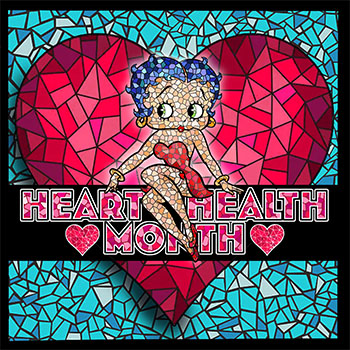
 PROTECTING OUR BEAUTIFUL HEARTS
Hello everyone and welcome back to the Blog! Here it is February once again when our thoughts gravitate to hearts, valentines and love. It’s a month in which we focus on flowers, chocolates and romance.
It’s also a month, however, when we are asked to pay attention to not just the happiness of our hearts but also to the health of our hearts because February is American Heart Health Month.
First proclaimed in 1964 by President Lyndon B. Johnson, this year marks the 59th consecutive year the American Heart Association has strived to bring the issue of heart health to everyone and especially to women. And all of us at Fleischer Studios, with our iconic cartoon character BETTY BOOP, are honored to be a part of this annual message.
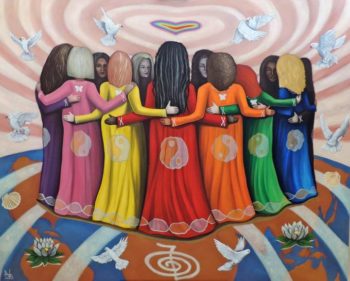 Betty has always been a champion of justice, important causes and women’s rights going way back to her cartoons of the 1930s. And that has not changed as she happily joins the fight against heart disease emphasizing the good health of women everywhere. And because heart disease is the number one health risk for women worldwide, it is a cause that is very near and dear to her heart.
Unfortunately, 1 in 13 women will die of breast cancer. Yet, 1 in every 3 will die of cardiovascular disease. So, it’s very important we understand two main topics of conversation when discussing heart disease and healthcare, which are gender and race.
First, in the healthcare world women are typically under-treated and under-served. It is common for our male counterparts to be taken more seriously by healthcare professionals when they complain of or exhibit symptoms associated with heart disease. than women. When women seek help they are often sent home from the hospital and told they are only suffering from stress, anxiety or indigestion. It’s often not until much later that these women find out they actually suffered a heart attack for which they received no treatment.
Second, women of color share the greatest risk for developing heart disease. For example:
- Cardiovascular disease kills more than 50,000 Black women each year, with stroke leading the cause of death among Black women.
- Among Black women ages 20 and older, approximately 59% already have some form of cardiovascular disease.
- Also in this age group, nearly 58% of Black women have high blood pressure, a leading cause of cardiovascular disease.
So, what can we all do to protect ourselves? We can begin by recognizing the most common symptoms of a heart attack or stroke, which include:
- Dizziness or light-headedness while sitting quietly
- Fatigue, tiredness or shortness of breath
- Flu-like symptoms, nausea or vomiting without apparent reason
- Unexplained pain the the neck, shoulders, upper back or chest

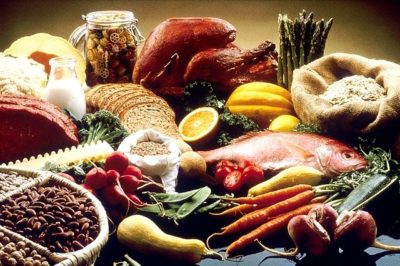
And now that we have a basic understanding of the symptoms of a heart attack or stroke, we also need to know that just a few lifestyle changes will reduce our risk, including:
- Adding more fruits and vegetables to our diet, replacing red meats with lean proteins like fish and chicken, and reducing our intake of salt
- Setting reasonable weight-loss goals with one’s primary physician
- Exercising easily for 15 to 30 minutes a day with simple stretching or walking
- Using alcohol in moderation
- Eliminating tobacco use in all forms
We’re all in this together, Ladies! As Betty and the American Heart Association remind us every year, a little common sense and a bit of basic medical know-how will go a long way in helping us reach our goals of improving our health and protecting our beautiful hearts.
In closing, Betty and all of us at Fleischer Studios send a heart-felt THANK YOU to the American Heart Association for their tireless efforts to educate and inform us all about heart disease in its many forms.
And thanks to all or you for being here again as we share this important message and focus our attention once again on HEART HEALTH AWARENESS during the month of February and all year long.
Until next time everyone, stay safe, stay in GOOD HEALTH and . . .
TAKE THE COURSE AND TAKE CHARGE!

Leave a Comment