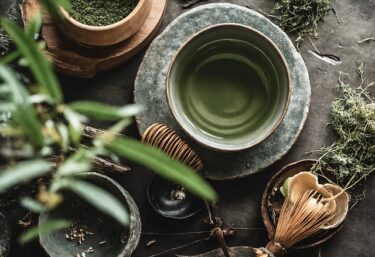
 THE MEAN GREEN HEALTH MACHINE
Welcome back to the Blog everyone!
Zen monks have known about Matcha Green Tea for centuries and today new generations of folks everywhere are singing the tea’s praises.
This beverage of choice for many people the world over was first discovered in China more than a thousand years ago. And, from China the craze migrated to Japan where the tea was named “matcha.” It was this tea that the Zen Buddhist monks drank to enhance their experience of peaceful awareness during meditation.
So, what is it that makes matcha green tea different from the well-known regular green tea? And why has it caught fire as the trendy go-to beverage on the block?
First, true matcha tea is a product of Japan. You see, the Japanese use an ancient technique in which the green tea leaves are carefully shaded with straw mats for 30 days before they are picked from the plant. This allows the leaves to grow super rich with amino acids and chlorophyll. Then, when the leaves are picked they’re dried and finely ground into a bright green powder. In this way, the entire leaf is dissolved in water for a cup of tea rather than steeped in bags.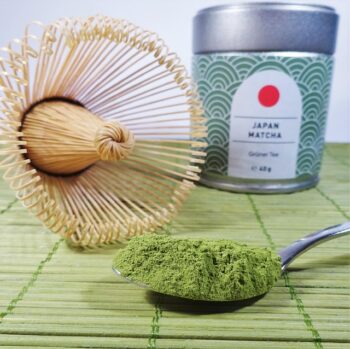
So, that’s the process. But what does that mean to us? Well, hang onto your hats everyone because here’s where it really gets fun.
Matcha is loaded with antioxidants! According to sources, it contains 6.2 times the antioxidant level of goji berries, 7 times that of dark chocolate, 17 times that of wild blueberries AND 60.5 times that of spinach.
In fact, it’s been estimated that one cup of matcha green tea has 137 times more antioxidant EGCG (epigallocatechin gallate) than a cup of regular green tea.
So, when we take our tea break with matcha we’re also:
– Fighting cancer-causing free radicals
– Slowing the aging process
– Improving clarity of mind
– Reducing inflammation
– Aiding weight loss
– Adding dietary fiber and,
– Reducing stress
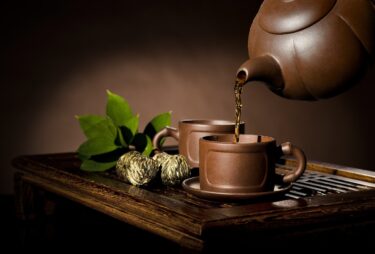 So far, so good. Right? But the question will arise, “Does it taste good?” And while some may describe this tea as an “acquired taste” because of its strong flavor, given a chance it will probably grow on you. Moreover, there are so many delicious variations of matcha tea drinks available today one of them is sure to delight even the most delicate taste buds.
And if you prefer to brew up a cup at home, try these simple tips to make sure you’re getting the best cup of matcha possible.
1) Boil water and then allow it to sit for five minutes.
2) Measure 1 teaspoon of matcha into a matcha bowl or large cup.
3) Add a cup of the boiled water to the bowl. Whisk the mixture briskly until the tea is absorbed and a light-colored foam forms on the top.
4) Drink immediately before the powder has time to settle, to ensure the benefits end up inside you and not at the bottom of the bowl.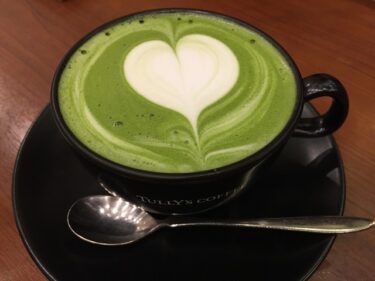
Additionally, while most of us use metal tableware, true aficionados of matcha tea say both the water and tea should be stirred with a bamboo whisk instead of a metal instrument. This, they say, will prevent the beneficial qualities of the tea from being altered or diminished in any way.
So, relax and enjoy. Have a cup of matcha tea — a Zen monk-approved, rich tasting, so-good-for-you hot drink that will calm, sooth and heal both mind and body.
In closing, thanks again for joining me everyone. Until next time stay safe, stay healthy and. . .
TAKE THE COURSE AND TAKE CHARGE!



Leave a Comment